Planning a holiday to Türkiye and keen to explore some of the world’s most fascinating ancient ruins? This incredible country sits at the crossroads of Europe and Asia, where empires rose and fell and left behind temples, theatres and entire cities that you can still walk through today. If you love history, architecture or archaeology, exploring ancient ruins in Türkiye is one of the most rewarding ways to experience its culture, landscapes and stories.
From Neolithic stone circles and Roman spa towns to cliffside tombs and mediaeval cathedrals, each site reveals a different chapter of human civilisation. Whether you are crafting a once-in-a-lifetime Türkiye holiday or adding culture to a broader Europe and Middle East itinerary, these ruins are the perfect starting point.
Fun Trivia
- Göbekli Tepe is regarded as the world’s oldest known monumental ritual site, built more than 11,000 years ago. Recognised by UNESCO, it predates Stonehenge and the Egyptian pyramids by several millennia, reshaping how historians understand early civilisation.
- Ephesus was once home to the Temple of Artemis, one of the original Seven Wonders of the Ancient World. The city itself remains one of the best preserved classical sites anywhere, with streets, theatres and libraries still clearly visible today.
- Troy contains at least nine distinct layers of settlement, showing that the city was destroyed and rebuilt repeatedly over thousands of years. This layered history supports both archaeological evidence and the legends recorded in Homer’s epics.
- Hierapolis was a renowned healing centre in Roman times. Visitors travelled from across the empire to bathe in its thermal waters, believing the mineral-rich pools offered both physical healing and spiritual purification.
- The Lycian Rock Tombs were carved into high cliff faces to allow the deceased to be closer to the sky. The ancient Lycians believed that this elevated position helped guardian spirits guide the souls safely into the afterlife.
Türkiye: A Living Museum of Empires
From early Neolithic communities to mighty Greek and Roman cities, mediaeval Armenian kingdoms and Byzantine strongholds, Türkiye is home to some of the most impressive archaeological sites on Earth. Many are recognised by UNESCO and protected as cultural treasures due to their unparalleled historic significance. Walking through these ruins feels like stepping into different eras of human civilisation, with each region offering its own unique story.
Here are eight of the most incredible ancient ruins to add to your Türkiye itinerary.
Göbekli Tepe – The World’s Oldest Monumental Site
Göbekli Tepe, located in southeastern Türkiye, is one of the most groundbreaking archaeological discoveries of modern times. UNESCO identifies this site as dating back to roughly 9600 BCE, making it thousands of years older than Stonehenge and the Egyptian pyramids. Its vast T-shaped limestone pillars, many carved with animals and geometric designs, are thought to form part of the world’s first temple structures.
Archaeologists believe Göbekli Tepe marks the transition from nomadic hunter-gatherers to the earliest settled communities. Its sophistication challenges long-held assumptions about when organised religion and large-scale architecture began. Today, visitors can explore walkways overlooking active excavation areas and preserved stone circles that reveal humanity’s earliest attempts at monumental building.
Ephesus – Grandeur of the Roman World
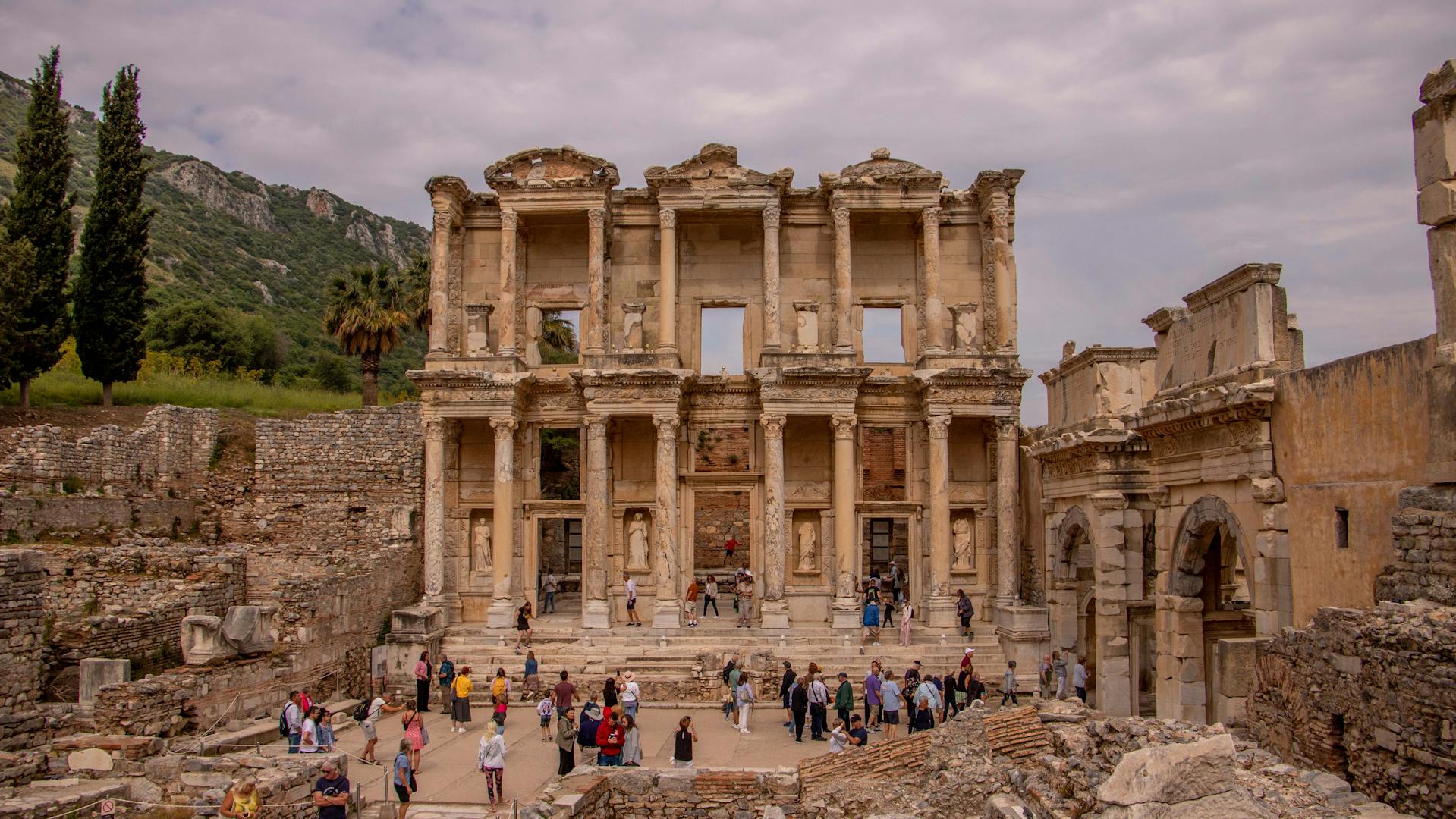
Ephesus is one of Türkiye’s most celebrated archaeological sites and is listed by UNESCO for its importance across the Hellenistic, Roman and early Christian periods. Once a thriving port city, Ephesus dazzles visitors with wide marble streets, towering columns and exceptionally well-preserved structures.
Highlights include the Library of Celsus, an iconic façade once home to thousands of manuscripts. The city also housed the famed Temple of Artemis, one of the original Seven Wonders of the Ancient World, though only fragments remain today. The Great Theatre, which once seated around 25,000 spectators, still commands attention with its impressive scale.
Strolling through Ephesus brings you face to face with centuries of political, religious and commercial history in a way that feels extraordinarily immersive.
Troy – Where Myth Meets Archaeology
Few ancient cities hold as much mythic weight as Troy. Immortalised by the poet Homer in the Iliad, Troy was the stage for the legendary Trojan War and the famous wooden horse stratagem. While the truth behind these stories continues to spark debate, the archaeological remains offer compelling insights into the city’s real history.
Today, Troy is recognised as a UNESCO World Heritage Site with visible layers representing more than 4,000 years of settlement. Massive stone walls, foundations of ancient gates and remnants of palatial buildings reveal how Troy evolved across civilisations. The site’s multi-layered nature shows how the city was destroyed, rebuilt and reimagined many times.
Visitors can experience both myth and reality here, making it an essential stop for anyone drawn to classical storytelling or archaeology.
Aphrodisias – The City of Sculptors
Named after Aphrodite, the Greek goddess of love, Aphrodisias was once a thriving centre of art, philosophy and craftsmanship. UNESCO lists it as a site of outstanding universal value due to its marble quarries and the exceptional skill of its ancient sculptors.
The city’s landmarks include the Tetrapylon, a monumental four-columned gateway, and the Temple of Aphrodite, which later transformed into a Christian basilica. The Stadium of Aphrodisias is among the best preserved in the ancient world and illustrates how sporting events were embedded in civic life.
Its on-site museum houses a remarkable collection of reliefs, portraits and sculptures, demonstrating why Aphrodisias became famous across the Roman Empire for artistic excellence.
Hierapolis and Pamukkale – Thermal Waters and Ancient Healing
Hierapolis sits atop the dazzling white terraces of Pamukkale, one of Türkiye’s most photographed natural wonders. This remarkable pairing of geology and archaeology has earned recognition as a UNESCO World Heritage Site. Hierapolis was established by the Romans as a spa city, thanks to the mineral-rich thermal springs flowing through the area.
Visitors can explore the Roman theatre, necropolis and ancient bath complexes. The warm pools of Pamukkale were believed to have healing properties and still welcome travellers today. The mix of ruins and natural beauty makes this site truly unforgettable and a must for those seeking both history and relaxation.
Lycian Rock Tombs – Ancient Burial Chambers in the Cliffs
Along the southern coast near Fethiye lies one of Türkiye's most visually striking archaeological sites. The Lycian Rock Tombs, carved directly into cliff faces, were built to honour the deceased and elevate them closer to protective spirits.
The most famous of these, the Tomb of Amyntas, is reached by stone steps that ascend the hillside. From the tomb’s vantage point, visitors enjoy stunning views of the Lycian coastline. While the tombs are now empty due to centuries of looting, the craftsmanship remains extraordinary.
These cliffside chambers offer a powerful glimpse into Lycian beliefs and their reverence for the afterlife.
Ani – The City of a Thousand and One Churches
Near Türkiye’s eastern border sits Ani, once the grand capital of the Bagratid Armenian kingdom. Known as the “City of a Thousand and One Churches,” Ani was a thriving mediaeval metropolis positioned along major trade routes.
Today, Ani’s windswept ruins include the Cathedral of Ani, remnants of fortifications, churches and caravanserais. The architectural style reflects the crossroads between Armenian, Byzantine and regional influences. UNESCO recognises Ani for its cultural heritage and its role in demonstrating medieval urbanism and religious architecture.
Walking through Ani feels like exploring a forgotten kingdom preserved by time and silence.
Termessos – A Mountain Fortress Frozen in Time
Set high in the Taurus Mountains, Termessos is unlike any other ancient city in Türkiye. Its dramatic location is perched above steep cliffs and covered in fragrant pine forests. This natural fortress was so inaccessible that even Alexander the Great reportedly could not conquer it.
Highlights include the amphitheatre, which offers panoramic views across the valley, and the remains of a gymnasium and palaestra once used to train young athletes. Termessos suits travellers who enjoy a blend of history, hiking and mountain scenery.
Its rugged isolation gives the ruins an atmospheric quality that many visitors find deeply memorable.
Expert Travel Tips
- Visit Türkiye between April and June or September and October for comfortable temperatures and fewer crowds at major archaeological sites. These shoulder seasons are ideal for walking through ruins without the intense summer heat.
- Wear sturdy, supportive shoes and carry water, as many ancient sites involve uneven stone paths, exposed terrain or uphill walks. Sun protection is also important, particularly at open-air ruins with limited shade.
- Use domestic flights or intercity coaches to travel between regions, as Türkiye’s archaeological sites are spread across large distances. Efficient transport makes it easier to combine multiple historical regions into a single itinerary.
- Respect cultural etiquette when visiting religious structures and sacred sites. Modest clothing that covers shoulders and knees may be required, and scarves are often recommended for women entering mosques.
- Consider purchasing heritage or museum passes if you plan to visit several major ruins. These passes can save time and money while providing easier access to key historical attractions.
Plan Your Türkiye Journey
Türkiye offers one of the richest collections of ancient ruins in the world, from Neolithic stone circles to Roman bathhouses and cliffside tombs. Each site reflects a different civilisation and era, giving travellers a rare opportunity to explore millennia of human history in one destination.
If you are ready to explore these cultural treasures, plan your trip today today with Entire Travel Group.