A Walk Through Time
The Siq: Petra’s Majestic Entrance
Your Petra adventure begins at the Siq, a 1.2-kilometre passageway flanked by cliffs reaching up to 80 metres high. This winding gorge was formed by tectonic forces and smoothed over centuries by water flow, creating undulating patterns of red, gold and pink.
Along the way, traces of Petra’s advanced engineering remain visible — ancient water channels, carvings of deities and baetylus stones believed to hold sacred significance. As sunlight filters between the narrow walls, anticipation builds until you catch your first glimpse of Petra’s most famous façade.
“The moment the Treasury appeared at the end of the Siq was unforgettable — it felt like uncovering a secret lost to time.” – Emma P., 2023
Al-Khazneh (The Treasury): Petra’s Iconic Wonder
Emerging from the Siq, you’ll stand before Al-Khazneh, or The Treasury, Petra’s most recognisable structure. Rising 39 metres tall and intricately carved from sandstone, it’s a masterpiece of Nabataean craftsmanship. Scholars still debate its purpose — some believe it was a royal tomb, while others think it served a ceremonial role.
Arrive at sunrise or sunset to see how the light transforms its façade, shifting from coral to deep crimson. For a truly atmospheric experience, attend Petra by Night, when 1,500 candles illuminate the monument beneath a blanket of stars.
“I’d seen photos all my life, but nothing compares to standing there in silence under the glow of candlelight.” – Daniel R., 2024
The Street of Facades: Life and Legacy
Beyond the Treasury lies the Street of Facades, where rows of tombs and dwellings are carved into towering cliff walls. These structures once belonged to noble families and city leaders, their intricate designs reflecting Petra’s fusion of Hellenistic and Middle Eastern styles.
As you walk this ancient thoroughfare, you can almost imagine the hum of merchants and artisans who once filled the valley with life and trade.
“The Street of Facades felt like a glimpse into the daily rhythm of an ancient civilisation.” – Lara H., 2024
The Royal Tombs: Where Kings Rested
The Royal Tombs, carved high into Petra’s eastern cliffs, remain some of its grandest monuments. The Urn Tomb is perhaps the most striking, later repurposed as a church in Byzantine times. Nearby, the Silk Tomb dazzles with waves of colourful sandstone, while the Corinthian and Palace Tombs showcase exquisite detail and scale.
These resting places were designed to impress, blending architecture with geology in a way unique to Petra. From their elevated terraces, you’ll enjoy some of the best panoramic views of the city below.
“Each tomb was like a work of art — the colours of the rock were astonishing in the sunlight.” – Michael S., 2023
The Theatre: Entertainment Carved in Stone
Set against the backdrop of Petra’s cliffs, the Theatre is an engineering marvel. Carved directly from the mountainside, it once seated over 8,000 spectators, hosting performances and public gatherings. Originally Nabataean in design, it was later expanded by the Romans, illustrating Petra’s layered cultural history.
Even after two millennia, the theatre’s acoustics and form remain remarkably intact, a testament to the city’s mastery of stonework.
The High Place of Sacrifice: Sacred Heights
Perched atop Jebel al-Madhbah, the High Place of Sacrifice offers insight into the Nabataeans’ spiritual practices. Reached by a 45-minute climb up rock-cut steps, it rewards travellers with sweeping views over the valley and beyond.
Here, altars and basins carved into the stone hint at ancient rituals once performed to honour the gods. Though the exact ceremonies remain a mystery, the site radiates a profound sense of reverence.
“The view from the top made me feel like I was standing on history itself — you could see all of Petra laid out below.” – James K., 2024
Ad Deir (The Monastery): Petra’s Grand Finale
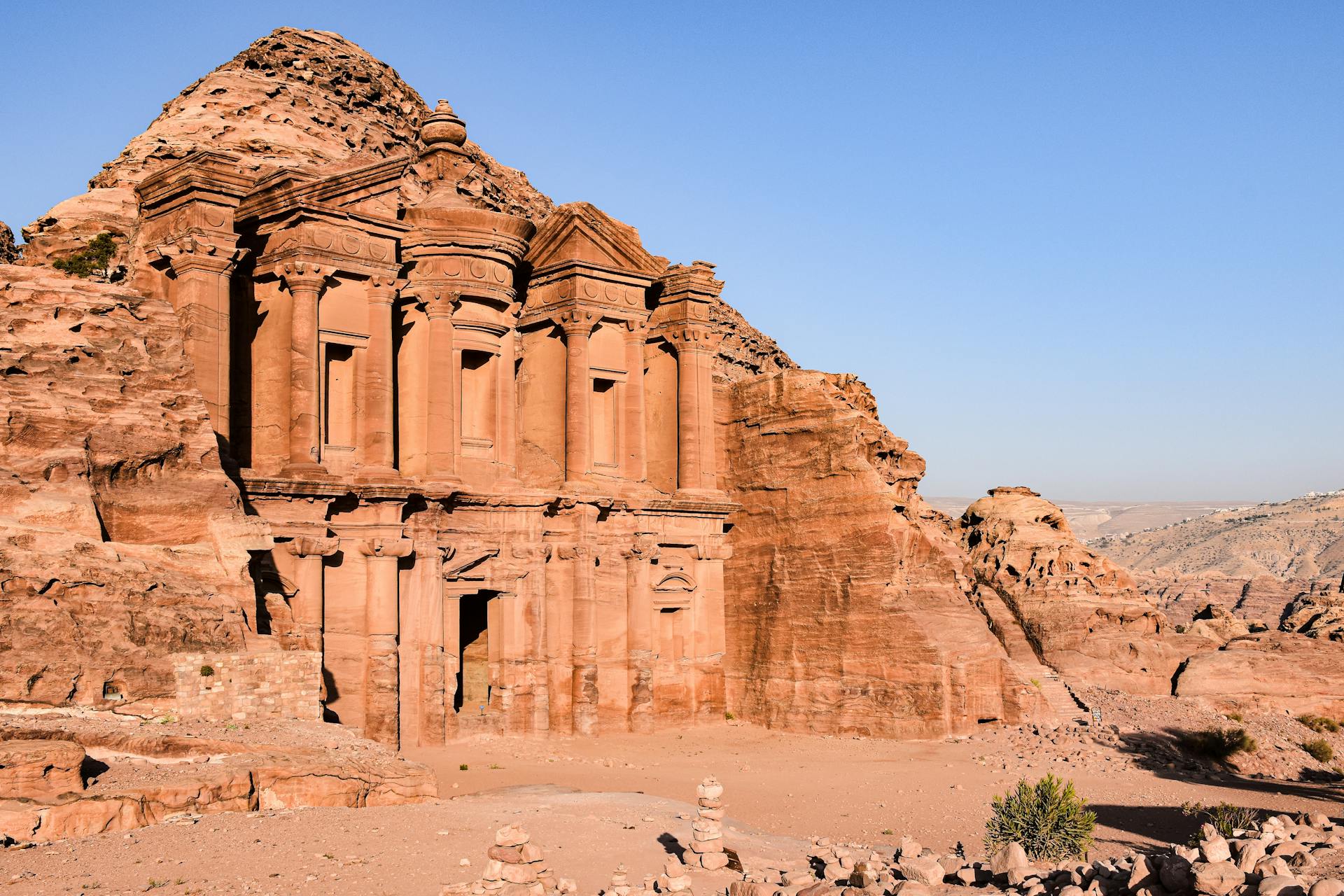
Known as Ad Deir, the Monastery rivals the Treasury in magnificence but dwarfs it in size. Towering 45 metres high and 50 metres wide, it sits high above the main valley, accessible via an 800-step climb. The journey is challenging yet rewarding, winding past sandstone ridges and desert blooms.
At the summit, the Monastery’s vast façade and surrounding viewpoints offer unmatched tranquillity. Small cafés nearby serve mint tea — the perfect reward for your efforts.
“Reaching the Monastery was my highlight — sipping tea while looking over the desert felt timeless.” – Nadia T., 2023
The Colonnaded Street and Great Temple: The Heart of the City
At Petra’s centre lies the Colonnaded Street, once its bustling marketplace. Marble pillars line the ancient road, remnants of shops, fountains and public spaces that connected the civic and religious hubs.
At its southern end stands the Great Temple, one of Petra’s largest and most complex archaeological sites. Excavations reveal mosaics, marble flooring and grand staircases — evidence of a building used for ceremonies and gatherings. The temple’s design reflects the city’s prosperity and cultural blend under Nabataean rule.
Beyond Petra: Exploring More of Jordan
Many travellers pair their visit to Petra with other Jordan destinations such as Wadi Rum, Amman and the Dead Sea. Wadi Rum’s red dunes and towering rock formations offer cinematic desert landscapes, while the Dead Sea provides the perfect place to unwind after exploring Petra’s ancient wonders.
