Planning a trip to France that goes beyond Paris? The Loire Valley châteaux offer one of Europe's most captivating cultural landscapes, where Renaissance castles rise from vineyards, formal gardens stretch towards the riverbanks and historic towns feel suspended in time. Often referred to as the Garden of France, the Loire Valley blends architectural grandeur with pastoral beauty, making it a must-visit for travellers interested in history, art and slow paced exploration.
Stretching for around 280 kilometres along the Loire River, this UNESCO listed cultural landscape is home to hundreds of castles, manor houses and fortified estates. Some were royal residences, others noble retreats or strategic strongholds. Together, they tell the story of France's shifting power, artistic ambition and refined way of life during the Renaissance and beyond. The château tradition echoes through other European destinations, where similar architectural legacies define entire regions.
Trip Highlights
- Visit some of the most iconic Loire Valley castles, including Chenonceau, Chambord and Villandry
- Explore Renaissance gardens, riverside landscapes and historic market towns
- Learn how French royalty and nobility shaped the region's architecture and culture
- Enjoy scenic drives, gentle cycling routes and relaxed village dining
- Experience one of France's richest cultural regions at an unhurried pace
Why the Loire Valley Is Known as the Garden of France
The Loire Valley's reputation as the Garden of France comes from more than its decorative gardens. The region's fertile soils support vineyards, orchards and market gardens that have fed royal courts for centuries. This abundance influenced how castles were designed, with many estates blending architecture and landscape into a single artistic vision.
Unlike fortified medieval castles built purely for defence, many Loire châteaux were designed to impress. Light filled galleries, ornamental staircases and landscaped grounds reflected Renaissance ideals imported from Italy and adapted to French tastes. The river itself acted as a transport route, allowing materials, artists and ideas to flow freely between towns. This artistic exchange mirrors the cultural richness found in Italy's historic regions, where Renaissance influence similarly transformed entire landscapes.
Château de Chenonceau: The Ladies' Castle
Few castles capture the imagination quite like Château de Chenonceau. Gracefully spanning the River Cher, it is often described as the most elegant château in the Loire Valley. Its nickname, the Ladies' Castle, reflects the powerful women who shaped its history.
Originally gifted by King Henry II to Diane de Poitiers, the château was later reclaimed by Catherine de Medici, who expanded it and commissioned the galleries that stretch across the river. The result is a structure that feels both intimate and monumental, with water reflections amplifying its beauty.
Visitors can explore richly decorated rooms, historic kitchens and carefully designed gardens that reflect contrasting personalities. Walking beneath the arches by boat or along the riverbank offers one of the most memorable views in the region.
Château de Chambord: Grandeur Without Rival
If Chenonceau is refined elegance, Château de Chambord is unapologetic ambition. Built as a hunting lodge for King Francis I, Chambord is the largest château in the Loire Valley and one of the most recognisable in France.
With more than 400 rooms, 365 fireplaces and a roofline resembling a miniature city of towers and chimneys, Chambord was designed to impress. Its famous double spiral staircase allows two people to ascend and descend without crossing paths, a feature often attributed to Renaissance innovation.
Surrounded by an enormous forested estate, Chambord feels more like a palace set within wilderness than a country retreat. Late afternoon visits are particularly rewarding, when light softens the stonework and reflections appear in surrounding waterways.
Château d'Ussé: A Fairytale Inspiration
Perched at the edge of the Chinon Forest, Château d'Ussé is widely believed to have inspired Charles Perrault's Sleeping Beauty. With its turrets, sloping roofs and pale stone façade, it looks every part the fairytale castle.
The château overlooks the Loire and Indre rivers, offering sweeping views across the countryside. Inside, visitors encounter richly furnished rooms, tapestries and a dramatic staircase that feels straight from a storybook.
Ussé's charm lies in its scale. It feels less monumental than Chambord yet deeply atmospheric, making it a favourite for travellers seeking romance and imagination over grandeur. Similar storybook settings await in Switzerland's charming cities, where alpine backdrops create equally enchanting atmospheres.
Château d'Amboise: Royal Power and Artistic Legacy
Rising above the town of Amboise, Château d'Amboise once served as a royal residence for several French kings. Its elevated position offers panoramic views of the Loire River and surrounding rooftops.
The château holds particular significance as the burial site of Leonardo da Vinci, whose tomb lies in the Chapel of Saint Hubert. His presence reflects the strong Italian influence that shaped Renaissance France during this period.
While parts of the original structure were lost over time, the remaining buildings and terraces still convey a sense of royal authority. Walking the ramparts gives insight into how strategic and symbolic location mattered as much as architectural beauty.
Château de Cheverny: Classical Harmony
Château de Cheverny is often described as the most harmonious château in the Loire Valley. Built in the 17th century, it has remained remarkably unchanged, offering a rare glimpse into aristocratic life as it once was.
Inside, rooms are lavishly furnished with period furniture, tapestries and artwork. Highlights include the formal dining room and the arms room, where historical weaponry is displayed with precision.
Cheverny's appeal lies in its balance. Everything feels carefully proportioned, from the façade to the interior décor. For visitors interested in classical French architecture and interiors, it is an essential stop.
Château d'Azay-le-Rideau: A Renaissance Jewel
Set on an island in the Indre River, Château d'Azay-le-Rideau is often described as a jewel of early French Renaissance architecture. Its reflection in the water creates one of the most photographed scenes in the Loire Valley.
Originally rebuilt in the early 16th century, the château combines medieval foundations with Renaissance elegance. Inside, visitors find richly decorated rooms, historical portraits and sweeping staircases.
The landscaped gardens surrounding the château provide space for quiet reflection, while the riverside setting enhances its sense of tranquillity.
Château de Blois: Layers of History
More than a single castle, Château de Blois is a complex of architectural styles reflecting centuries of royal occupation. Gothic, Renaissance and Classical wings stand side by side, each telling a different chapter of French history.
Blois played host to kings, queens and political intrigue, including infamous assassinations that shaped the nation's future. Today, visitors can explore richly painted halls, royal apartments and one of the most celebrated spiral staircases in France.
Its location within the town of Blois makes it easy to combine castle exploration with local markets, cafés and riverside walks.
Château de Villandry: Gardens as Art
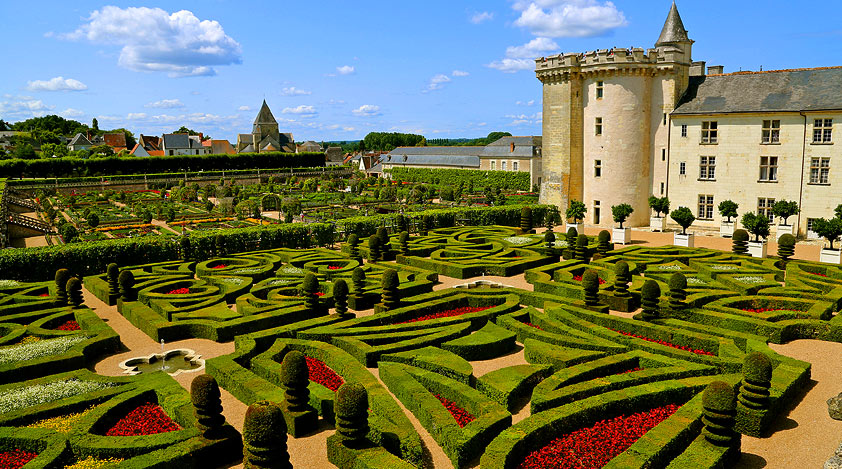
While Villandry's architecture is impressive, it is the gardens that define Château de Villandry. Designed as a series of symbolic spaces, the gardens represent love, music, intellect and spiritual life through intricate planting patterns.
From ornamental flowerbeds to vegetable gardens laid out like tapestries, Villandry showcases how landscape design was elevated to an art form. Each season brings a different palette, ensuring the gardens remain visually striking year round.
Walking through Villandry is as much about contemplation as aesthetics, making it a highlight for travellers interested in garden design and symbolism. The mastery of seasonal displays here rivals what visitors find in Europe's finest destinations, where careful planning creates year-round beauty.
Château de Langeais: Medieval Strength
For a glimpse into medieval France, Château de Langeais offers a striking contrast to Renaissance elegance. With its fortified towers, drawbridge and ramparts, Langeais retains a distinctly defensive character.
Inside, rooms are furnished with medieval tapestries and period furniture, while a life size re-creation of a royal wedding commemorates the union that helped unify France.
Walking along the parapet provides insight into medieval warfare and castle defence, making Langeais particularly engaging for history enthusiasts.
Expert Travel Tips for Visiting the Loire Valley
- Visit between May and September for the best weather and garden displays
- Hire a car or join a guided tour to reach castles spread across the region
- Allow time between château visits to avoid rushing and visual fatigue
- Combine castle visits with village stops for local food and wine experiences
- Book popular castles like Chambord and Chenonceau early in peak season
Traveller Experiences
"Seeing the castles in person felt surreal. Each one had its own personality and story."
– Traveller from Sydney
"The gardens at Villandry were unforgettable. We spent hours wandering and still wanted more."
– Traveller from Melbourne
"We loved the balance of history and countryside. The Loire Valley felt relaxed and refined."
– Traveller from Brisbane
Planning Your Loire Valley Journey
The Loire Valley châteaux offer more than fairytale beauty. They provide insight into France's artistic ambition, political history and enduring love of landscape and design. Exploring them at a relaxed pace allows each castle to reveal its unique character.
Picture yourself strolling through centuries-old gardens as morning mist rises from the Loire River. Our France travel packages capture every magical detail of this enchanting region.