Top 10 Culinary Delights of Central Asia to Try while Travelling on the Golden Eagle
Posted by on 09 Sep 2024
Travelling through Central Asia is as much a culinary journey as it is a cultural one. From bustling Silk Road cities to remote steppe landscapes, the region's food reflects centuries of trade, migration and nomadic life. Planning a trip along the Silk Road in 2025? Exploring the Five Stans aboard the Golden Eagle offers a rare opportunity to experience these flavours in the places where they were born, paired with curated excursions and refined onboard dining.
Central Asian cuisine is hearty, comforting and deeply connected to hospitality. Meals are designed to be shared, celebrated and remembered. Influences from Persia, China, Russia and the Middle East weave through everyday dishes, resulting in a food culture that feels both familiar and entirely its own. Whether you are sampling traditional fare during market visits or enjoying regionally inspired menus onboard, food becomes a powerful lens for understanding life along this historic route. The architectural marvels in Central Asia reflect this same cultural fusion, creating a landscape where every structure tells a story of ancient trade routes.
Fun Facts
- The Silk Road introduced spices, cooking techniques and ingredients that still shape Central Asian cuisine today
- Many traditional dishes were created for nomadic lifestyles, designed to be filling and easy to prepare over open fires
- Rice dishes like plov are often cooked in massive communal cauldrons called kazans
- Horse meat remains a respected and traditional protein in several Central Asian cultures
- Meals are considered a sign of respect, and guests are often served the best cuts first
A Culinary Journey Through the Five Stans
Travelling across Turkmenistan, Uzbekistan, Kazakhstan, Kyrgyzstan and Tajikistan reveals how geography shapes the plate. Desert regions favour preserved meats and breads, fertile valleys highlight rice and vegetables, while mountain communities rely on dairy and hearty grains. Each stop along the Golden Eagle route introduces new flavours while reinforcing shared culinary traditions.
Below are ten iconic dishes that define Central Asian food culture and deserve a place on every traveller's must-try list.
Beshbarmak: The Heart of Celebration
Often described as the soul of Kazakh and Kyrgyz cuisine, beshbarmak translates to "five fingers," referencing its traditional method of being eaten by hand. Tender boiled meat, commonly lamb or horse, is served over wide pasta sheets and topped with rich broth.
This dish is reserved for celebrations and honoured guests. Portions and cuts are chosen carefully, reflecting respect and social hierarchy. Trying beshbarmak offers insight into the deep hospitality values that define Central Asian culture.
Shashlik: Street Food with Soul
Few smells are as inviting as skewered meat sizzling over open coals. Shashlik is found everywhere from roadside stalls to family gatherings, offering a smoky, flavourful introduction to local food culture. Like the vibrant street food in Italy, these grilled delights showcase how simple ingredients transform into memorable experiences.
Marinated meats are grilled alongside onions or fat for added richness. While simple in appearance, each region adds subtle variations in seasoning and technique. Enjoyed fresh off the grill, shashlik is best paired with flatbread and lively conversation.
Plov: Uzbekistan's National Treasure
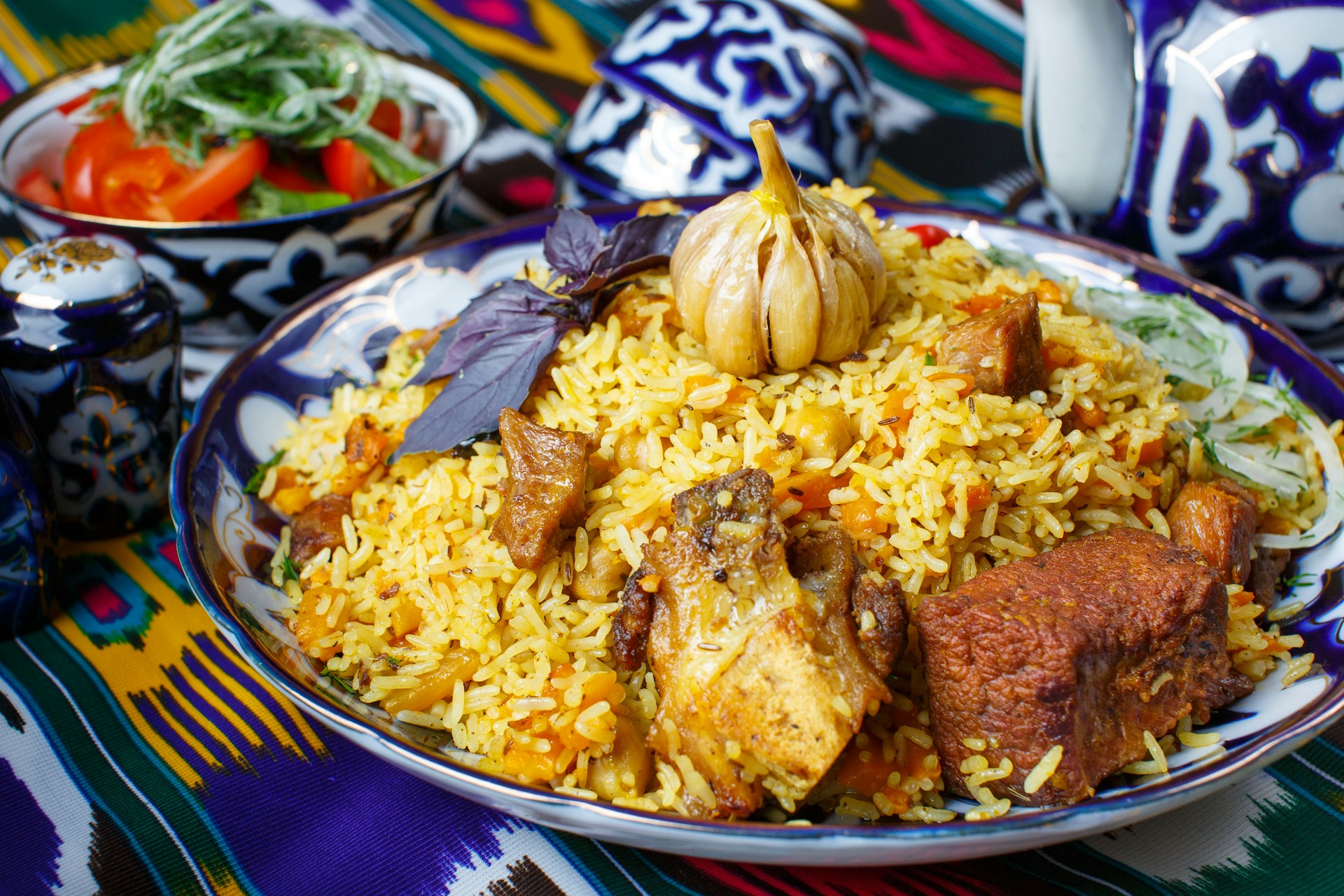
No Central Asian food list would be complete without plov, the iconic rice dish of Uzbekistan. Cooked slowly in a kazan, plov combines rice, carrots, onions, meat and a whole bulb of garlic into a deeply aromatic meal.
Plov is both everyday comfort food and ceremonial centrepiece. Different cities pride themselves on unique variations, making it a dish travellers often encounter multiple times and never tire of.
"Watching plov prepared in a massive kazan was unforgettable. The aroma alone drew the entire neighbourhood together." – Daniel M., 2023
Fitchi: A Taste of Turkmenistan's Past
Fitchi is a thin, baked meat pie once popular across Turkmenistan and now enjoying renewed appreciation. Its delicate pastry conceals a savoury filling of minced meat and onions, seasoned simply to let the ingredients shine.
Often enjoyed as a snack or light meal, fitchi reflects a quieter, home-style side of Central Asian cooking that contrasts beautifully with larger celebratory dishes.
Kazanlama: Nomadic Cooking at Its Finest
Born from desert traditions, kazanlama showcases the ingenuity of nomadic cuisine. Lamb is marinated, sealed in a pot and slow-cooked beneath hot sand, resulting in remarkably tender meat infused with natural flavours. This technique echoes the resourcefulness found in traditional Finnish dishes, where harsh climates shaped unique cooking methods.
This dish is rarely prepared outside its traditional setting, making it a rare and memorable experience for travellers fortunate enough to encounter it during their journey.
Qazi: A Distinctive Delicacy
Made from horse meat seasoned with spices, qazi is a sausage deeply rooted in Kazakh and Kyrgyz culinary traditions. Its rich, earthy flavour pairs beautifully with rice dishes and flatbreads.
While unfamiliar to some travellers, qazi offers an authentic taste of regional foodways shaped by nomadic life and available resources.
Gutap: Simple, Satisfying Comfort Food
Gutap is a half-moon flatbread filled with ingredients ranging from meat and onions to pumpkin or spinach. Cooked on a hot surface and eaten by hand, it is a beloved everyday staple.
Its versatility makes gutap a favourite across regions, easily adapted to seasonal ingredients and personal tastes.
Manti: Dumplings of the Silk Road
Steamed dumplings known as manti reveal the influence of East Asian cuisine along the Silk Road. Filled with seasoned meat and sometimes pumpkin, these dumplings are hearty, comforting and widely enjoyed.
Manti are typically served with sour cream or butter, making them a perfect cold-weather dish in mountainous regions.
Kurut: Portable Nomadic Nutrition
Originally designed for long journeys, kurut consists of dried yoghurt balls that can be added to soups or eaten on their own. Tart and salty, they provide a burst of flavour and nutrition.
Modern versions sometimes lean sweet, but traditional kurut remains a symbol of practical, resourceful cooking.
Boortsog: A Sweet Finish
Golden, fried and irresistible, boortsog is a dough-based treat enjoyed across Central Asia. Served sweet with honey or savoury alongside soups, it bridges the gap between dessert and comfort food. The enjoyment of these treats mirrors the satisfaction found in exploring Thai street foods, where each bite carries cultural meaning beyond mere sustenance.
Its versatility and nostalgic appeal make boortsog a favourite among locals and travellers alike.
Expert Travel Tips
- Regional dishes vary by city, so try the same meal more than once to notice subtle differences
- Meals are often shared, so sampling a variety of dishes is encouraged
- Accepting food is a sign of respect, even if only a small portion
- Local markets offer some of the most authentic culinary experiences
- Inform your tour provider of dietary requirements well in advance
References
National tourism boards of Uzbekistan, Kazakhstan and Kyrgyzstan
- UNESCO Silk Roads Programme
- Regional culinary heritage publications
Picture yourself savouring plov in an ancient caravanserai while golden domes shimmer in the distance. Discover this extraordinary culinary heritage with Entire Travel Group's comprehensive destination options.

Subscribe now for your chance to win
a $500 Travel Voucher
Be the first to hear about our new Holiday Packages