Planning a trip to Tahiti in July? Few experiences capture the spirit of the islands quite like Heiva I Tahiti, a month-long celebration of Polynesian culture that brings music, dance, sport and storytelling to centre stage. More than a festival, Heiva is a living expression of identity, resilience and community, shaped by centuries of tradition and proudly celebrated across French Polynesia today.
Held annually in Papeete and surrounding islands, Heiva invites travellers to witness Tahitian culture at its most powerful and expressive. From thunderous drumbeats and intricate dance movements to strength-based sporting contests and handcrafted costumes, this is a cultural experience that goes far beyond a single performance. For travellers seeking meaningful encounters rather than surface-level sightseeing, Heiva offers an unforgettable window into island life. Beyond the main island, visitors can explore different islands to visit that also host their own vibrant Heiva celebrations throughout July.
Fun Trivia
- The word Heiva comes from hei meaning "to assemble" and va meaning "community place"
- Some dance costumes can weigh over 10 kilograms, especially those made with shells and seeds
- Performers often train for up to six months for a single competition night
- Traditional drumming rhythms used at Heiva predate European contact
- Heiva competitions helped revive cultural practices that were once banned in the 19th century
What Is Heiva I Tahiti?
Heiva I Tahiti is Tahiti's most important cultural festival, celebrating Polynesian heritage through dance, music, sport and oral history. While modern Heiva was formally established in the 1980s, its roots stretch back centuries to pre-colonial Tahitian society, when communal gatherings marked seasons, honoured gods and strengthened village bonds.
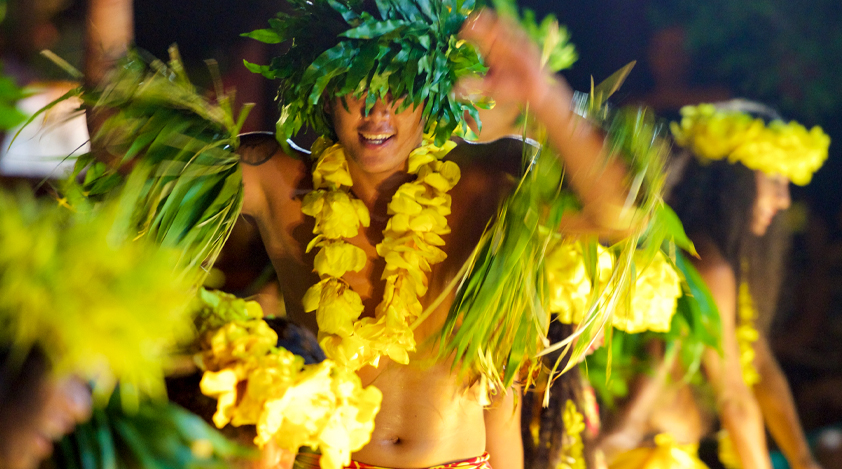
Dance is the most recognisable feature of Heiva, with large troupes of men and women performing powerful choreographies set to live percussion. Each performance tells a story, often drawn from mythology, historical events or ancestral legends. Movements are precise and symbolic, with gestures representing everything from ocean swells to everyday village life.
Alongside dance, Heiva showcases traditional music, craft displays and physical competitions that reflect the strength and endurance valued in Polynesian culture.
A History of Resilience and Revival
Heiva's survival is closely tied to Tahiti's cultural resilience. During the 19th century, many traditional dances and ceremonies were banned by colonial authorities and missionaries, who viewed them as inappropriate. Public performances were restricted, and cultural expression was driven underground for decades.
The revival began in earnest during the mid-20th century, as Polynesians sought to reclaim their heritage. In 1985, following French Polynesia's move towards political autonomy, Heiva was formally reinstated as a celebration of identity and pride. Today, it stands as a symbol of cultural continuity, blending ancestral practices with contemporary expression. This cultural renaissance mirrors how New Caledonia celebrates its own unique Melanesian heritage through festivals and community gatherings.
For travellers, this history adds depth to every performance. What you see on stage is not just entertainment but the result of generations working to preserve and honour their traditions.
Dance and Music at the Heart of Heiva
Traditional Tahitian Dance
Heiva dance performances are divided into categories, most notably ʻōteʻa and hīmene. ʻŌteʻa is fast-paced and rhythm-driven, with sharp hip movements and strong footwork. Hīmene, on the other hand, focuses on vocal harmonies and storytelling through song.
Men's dances emphasise strength, stamina and grounding, while women's dances highlight fluidity, grace and controlled hip movements. Both require extraordinary physical fitness and discipline.
The Power of Polynesian Drumming
Music at Heiva is dominated by percussion. Drums such as the to'ere and pahu drive performances with complex rhythms that guide dancers and energise audiences. These instruments were traditionally used for communication between villages, adding another layer of meaning to their modern use.
Traditional Sports and Cultural Competitions
Heiva is not limited to performance arts. Traditional sports play a major role and are deeply rooted in Polynesian daily life and survival skills.
Highlights of Heiva Sports Events
- Stone lifting competitions testing raw strength
- Javelin throwing using traditional techniques
- Va'a canoe races showcasing teamwork and endurance
- Fruit-carrying and obstacle challenges reflecting village life
These events often take place during the day, offering travellers a chance to explore different aspects of Tahitian culture beyond the main evening performances.
The Art of Costume Making
Costumes are integral to Heiva performances and are crafted entirely by hand. Natural materials such as feathers, shells, seeds, bark fibre and flowers are used to create elaborate designs that reflect the theme of each performance.
Costume creation is a community effort involving designers, dancers and elders. Colours, textures and materials are carefully chosen to align with the story being told, making each costume as meaningful as the dance itself.
When to Go: Timing Your Visit
Heiva I Tahiti is held throughout July, coinciding with Bastille Day celebrations in French Polynesia. This period falls during the dry season, offering pleasant temperatures and lower humidity compared to the wetter months.
July is also one of Tahiti's busiest travel periods, so advance planning is essential, particularly for accommodation and flights. Visitors should consider the essential Tahitian phrases to enhance their cultural experience during the festivities.
Where Heiva Takes Place
Most major performances are held in Papeete, Tahiti's capital, often at the To'ata Square cultural venue. However, smaller events and related festivities can be found across nearby islands, allowing travellers to combine Heiva with lagoon stays or island-hopping experiences.
Expert Travel Tips
- Arrive early for evening performances as seating is limited and events are popular with locals
- Dress lightly but respectfully, especially for cultural venues
- Book accommodation well in advance as July is peak season
- Combine Heiva with outer island stays for a balanced itinerary
- Allow flexibility for weather and schedule changes during festival season
A Traveller's Perspective
"Watching Heiva felt like stepping into the heartbeat of Tahiti. The energy, the stories, the pride on stage made it unlike any festival we've experienced." – Traveller, 2023
References
Plan Your Heiva I Tahiti Experience
Heiva I Tahiti is more than a festival. It is an invitation to understand the soul of Polynesia through movement, music and community. Whether paired with lagoon cruises, overwater bungalow stays or island-hopping adventures, it adds cultural depth to any Tahitian holiday. The festival complements perfectly with local culinary experiences, offering a complete immersion into authentic Polynesian life.
Plan your trip around Heiva and experience Tahiti at its most vibrant. Our Tahiti packages bring together cultural experiences, luxury accommodation, and seamless island connections for the complete French Polynesian adventure.