Planning a holiday to Thailand and keen to explore beyond its bustling markets, lively cities and pristine beaches? Thailand is home to remarkable UNESCO World Heritage Sites that reveal the country’s deep cultural roots and extraordinary biodiversity. These sites allow travellers to experience ancient capitals, forest sanctuaries and archaeological treasures, each offering insight into Thailand’s past and present.
According to the UNESCO World Heritage Centre, Thailand has eight recognised World Heritage Sites spanning cultural and natural categories. Whether you are a history lover, a nature enthusiast or planning a diverse itinerary, these six featured sites will enrich your understanding of the Land of Smiles.
Before diving into each destination, here are a few fun facts to inspire your journey.
Fun Facts About Thailand’s UNESCO World Heritage
- Thailand’s first World Heritage inscriptions in 1991 included Sukhothai, Ayutthaya and the Thungyai-Huai Kha Khaeng Wildlife Sanctuaries, noted for their cultural and ecological significance.
- As of 2024, Thailand holds eight World Heritage Sites, officially listed by UNESCO.
- The ancient cities of Sukhothai, Si Satchanalai and Kamphaeng Phet form a triad of heritage parks preserving Thailand’s earliest artistic and political developments.
- The Dong Phayayen-Khao Yai and Kaeng Krachan forest complexes protect elephants, tigers, gibbons and other endangered species.
Historic Town of Sukhothai and Associated Historic Towns
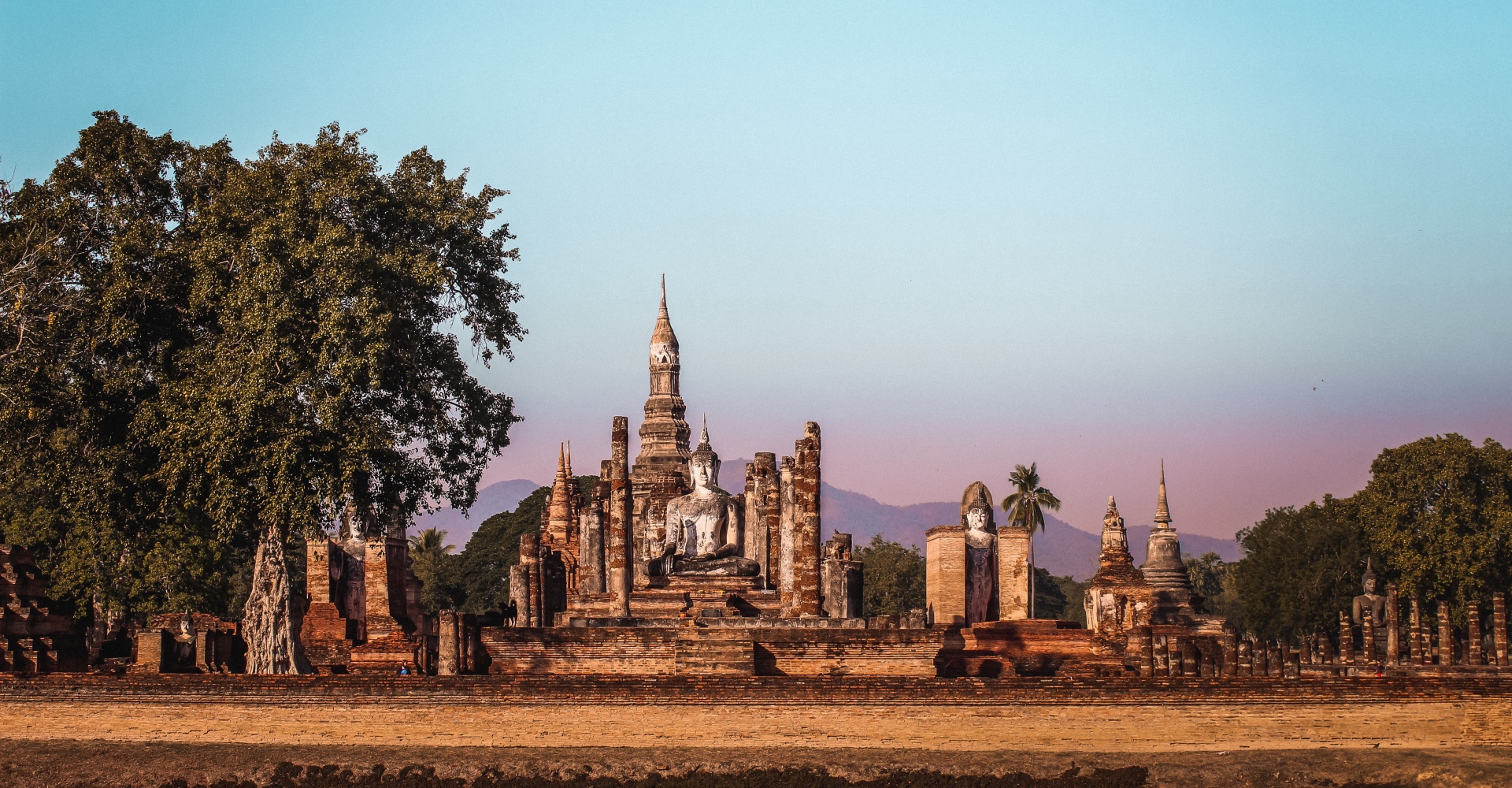
Often described as the birthplace of Thai civilisation, the Historic Town of Sukhothai and Associated Historic Towns includes Sukhothai, Si Satchanalai and Kamphaeng Phet, all recognised by UNESCO. These towns reflect the golden age of early Siam between the 13th and 14th centuries.
Sukhothai features iconic lotus-topped stupas, serene Buddha statues and beautifully planned temple complexes. Si Satchanalai was the centre for ceramic production and spirituality, while Kamphaeng Phet guarded the kingdom with imposing fortress-like city walls.
Cycling around these peaceful heritage parks is one of the best ways to explore them. Banyan trees, ponds and ancient stone pathways create an atmosphere that transports you back to Thailand’s earliest artistic period. Many travellers find Sukhothai to be a highlight of their Thailand cultural holiday, especially when paired with Ayutthaya and Chiang Mai.
Historic City of Ayutthaya
Just a short journey north of Bangkok lies the Historic City of Ayutthaya, a site of immense political and cultural influence. Once a global trading hub, Ayutthaya flourished from the 14th century until its fall in the late 1700s. The site is protected under UNESCO’s World Heritage Listing due to its historical importance.
The city was strategically built on an island surrounded by three rivers, creating natural barriers and facilitating complex water management systems. Today, Ayutthaya is known for its distinctive prang towers, monastery ruins and royal temple complexes. Notable sites include:
- Wat Phra Si Sanphet
- Wat Mahathat, home to the iconic Buddha head entwined in tree roots
- Riverside ruins that showcase Ayutthaya’s role in international trade
Travellers can explore by tuk-tuk, bicycle or boat, with many choosing a full-day tour from Bangkok. Those seeking a deeper experience often stay overnight to enjoy quieter mornings and golden hour views among the temple spires.
Ban Chiang Archaeological Site
The Ban Chiang Archaeological Site, located in Udon Thani province, offers fascinating insight into prehistoric Southeast Asia. Recognised by UNESCO, the site reveals evidence of human settlement dating back more than 3,500 years.
Archaeologists discovered red-on-buff pottery, bronze tools, rice cultivation practices and burial goods that illustrate early forms of technology and social organisation. The onsite museum displays ceramics, ornaments and reconstructions of burial sites, allowing visitors to imagine daily life during the Bronze Age.
Ban Chiang suits travellers who appreciate archaeology and want to explore regions of Thailand that are off the usual tourist trail. It pairs well with visits to rural communities in the north east where traditional village culture remains vibrant.
Dong Phayayen-Khao Yai Forest Complex
Stretching across more than 600,000 hectares, the Dong Phayayen-Khao Yai Forest Complex is one of Thailand’s richest ecosystems. Its UNESCO listing highlights its vital role in protecting endangered species and preserving tropical forest systems. More information is available via UNESCO.
The complex includes several national parks and wildlife sanctuaries. Khao Yai National Park is the most accessible for visitors travelling from Bangkok or central Thailand. Here you may encounter:
- Asian elephants
- Gibbons whose melodies echo across the canopy
- Hornbills with distinctive calls and colourful bills
- Waterfalls such as Haew Suwat and Haew Narok
Travellers often join guided wildlife walks, night safaris or short hikes that showcase the park’s landscape. For those building a balanced itinerary, this forest complex offers an excellent nature-focused complement to Thailand’s ancient city sites.
Kaeng Krachan Forest Complex
On Thailand’s western frontier sits the Kaeng Krachan Forest Complex, a vast protected area recognised by UNESCO for its ecological importance. The region spans cloud forests, montane landscapes and river systems that support diverse wildlife.
Notable species include the clouded leopard, Asiatic wild dog, marbled cat, rare birdlife and wild elephants. The complex also provides an important conservation bridge between Thailand and Myanmar.
Visitors typically explore Kaeng Krachan National Park, home to scenic viewpoints, waterfalls and birdwatching opportunities. Its mist-covered peaks and quiet trails make it a refreshing contrast to busy city centres or beach destinations.
Kaeng Krachan pairs beautifully with coastal holidays in Hua Hin or Prachuap Khiri Khan, making it a worthwhile addition for travellers seeking a blend of sea and forest.
Thungyai-Huai Kha Khaeng Wildlife Sanctuaries
The Thungyai-Huai Kha Khaeng Wildlife Sanctuaries are among the largest protected areas in Southeast Asia and were Thailand’s first natural sites inscribed by UNESCO in 1991. Located in the country’s west, these sanctuaries protect essential forest ecosystems that support elephants, leopards, gaur and numerous bird and reptile species.
Due to their conservation status, access is restricted and facilities are limited. Visitors can explore specific permitted areas, including visitor centres, short walking trails and designated viewpoints.
Travellers interested in conservation, biodiversity or environmental science will find these sanctuaries especially meaningful.
Expert Travel Tips
- Visit historical sites like Sukhothai and Ayutthaya between November and February when temperatures are cooler.
- Hire bicycles in heritage parks to cover more ground while enjoying scenic surroundings.
- Dress modestly with covered shoulders and knees when entering temples or sacred sites.
- For forest complexes such as Khao Yai or Kaeng Krachan, travel with a licensed guide who can explain wildlife behaviour and safety.
- Combine cultural sites with natural parks for a well-rounded Thailand holiday itinerary.
Plan Your UNESCO-Inspired Thailand Holiday
Discovering UNESCO World Heritage Sites in Thailand is one of the most rewarding ways to explore the country’s culture, landscapes and past. Whether you are tracing the origins of early Siam in Sukhothai or venturing into wildlife sanctuaries protected for future generations, each site enriches your journey.
If you are ready to plan your adventure, plan your trip today today with Entire Travel Group. You can also browse our curated Thailand holiday packages to find inspiration for your next getaway.